
Authentic design and counterfeit lighting: why original design matters
Today, copies of well-known design products circulate widely online and in physical retail. For customers, architects and retailers alike, it is not always easy to recognise the difference. The guide below highlights the key indicators of authentic lighting — from safety certifications and intellectual property rights to manufacturing practices and product traceability.
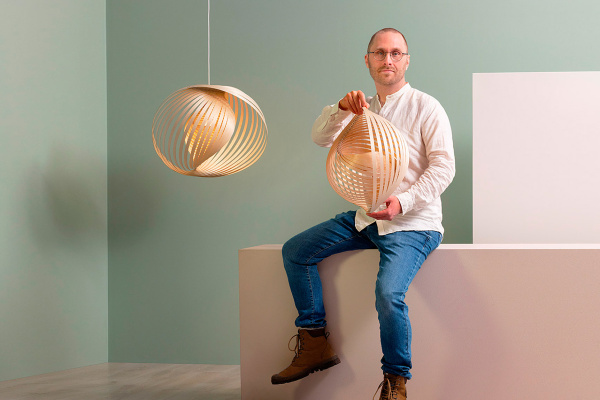
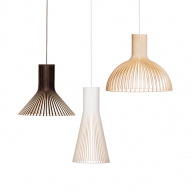
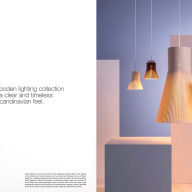
Secto Design founder Tuula Jusélius has seen the issue evolve over the years. When the company introduced its first lamps at the turn of the century, the aim was clear: to create lighting that would endure — technically, aesthetically and ethically. Working together with architect and designer Seppo Koho, the Finnish family company developed a wooden lighting concept that combined architectural precision with the natural warmth of local birch.
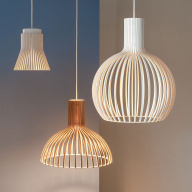
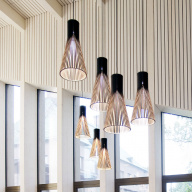
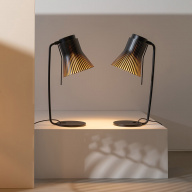
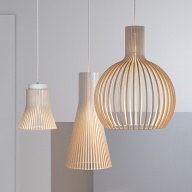
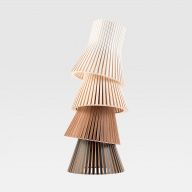
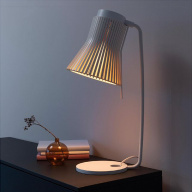
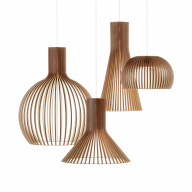
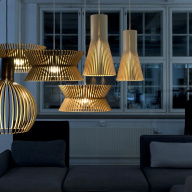
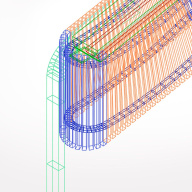
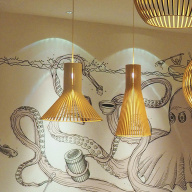
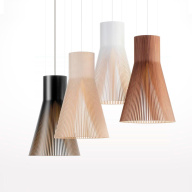
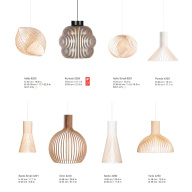
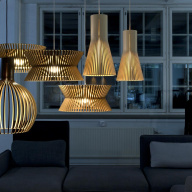
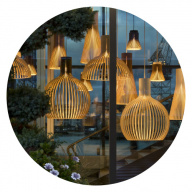
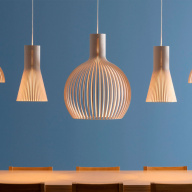
Koho’s approach extended beyond the form of the luminaires themselves. It also considered how light should be perceived in a space and the kind of atmosphere it creates. Secto Design luminaires are assembled from precisely cut birch slats. The dense upper section conceals the light source to prevent glare, while the lower section allows light to filter softly between the slats. The structure is deliberately complex and requires accuracy and expert craftsmanship to manufacture. For many years, it was believed that this complexity would discourage imitation. Unfortunately, it did not.
Copies of the lamps eventually began to appear on the market — made from dark woods that absorb rather than reflect light, as well as from bamboo, metal, rope and other materials that disregard the original design logic. Since then, Secto Design has consistently defended its designs — not because the company wishes to dwell on infringement, but because protecting original work helps maintain standards in design. “Original design is built on integrity”, Tuula Jusélius concludes.
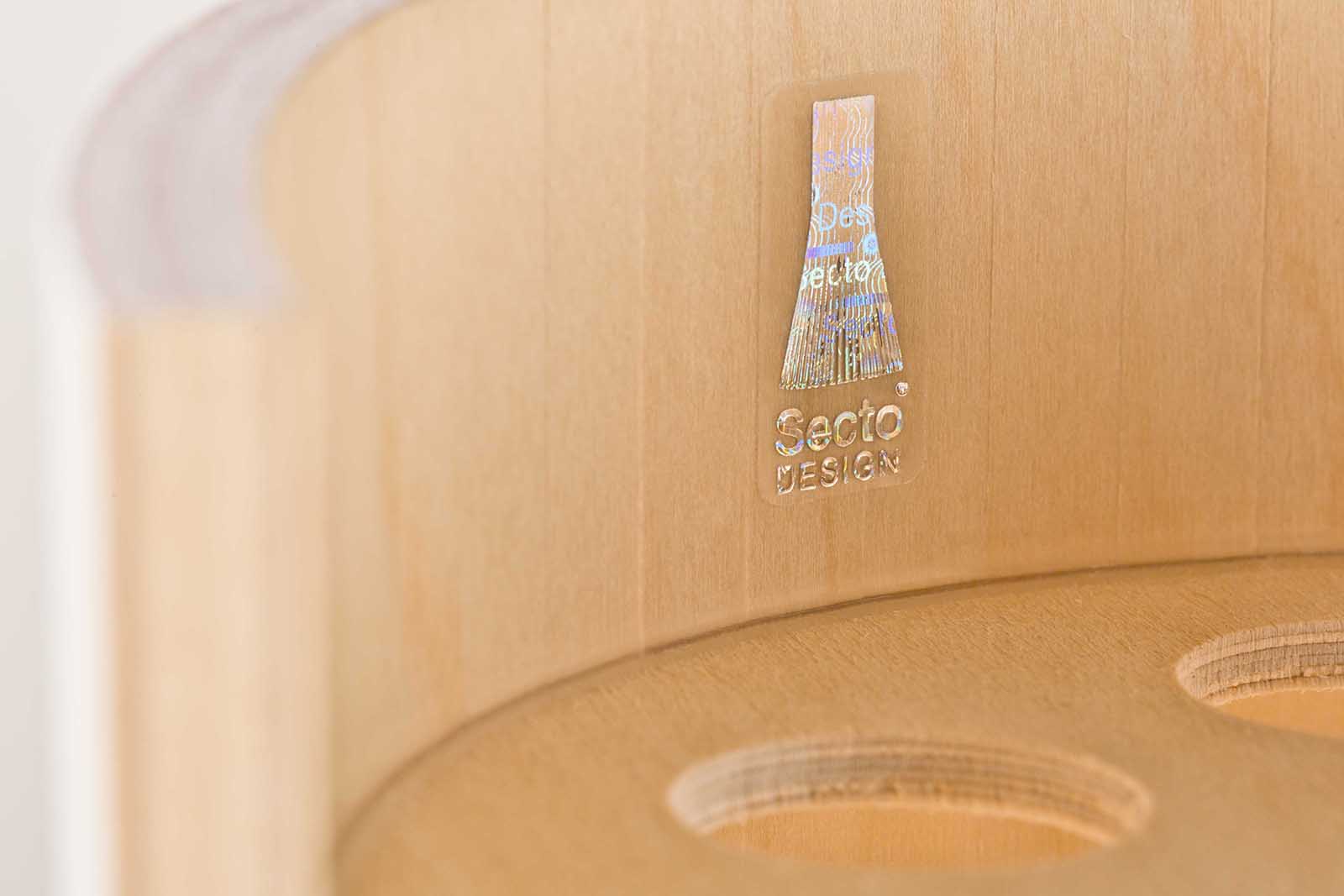
A hologram label identifies an authentic Secto Design lamp.
Safety and certification
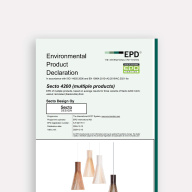
All original Secto Design lamps are officially certified for the markets in which they are sold:
CE certification (Europe)
UL certification (United States)
CUL certification (Canada)
PSE certification (Japan)
These certifications require extensive laboratory testing, technical documentation and continuous compliance. They confirm that a lighting product meets strict electrical and safety standards.
Many counterfeit lighting products do not carry legitimate certification. Some display misleading or false labels. Official testing is costly, and manufacturers of copied products often avoid these requirements entirely. Without proper certification, there is no reliable guarantee of electrical safety or material compliance. In private homes, this presents a risk to both people and property. In hospitality, commercial and public environments, it may create serious professional liability.
Compliance is not a formality. It is a safeguard.
Intellectual Property Rights (IPR) and designer royalties
Original design is protected by intellectual property rights (IPR). Every original Secto Design lamp sold generates a royalty payment to its designer. This reflects a fundamental principle of responsible design: creative work must be recognised and compensated. Manufacturers of counterfeit lighting do not pay royalties. They reproduce existing models without permission and without contributing to their development.
Original lighting represents years of expertise, prototyping and refinement. Design piracy undermines this process and weakens the foundations of responsible design businesses. Supporting authentic products supports the creative industry behind them.
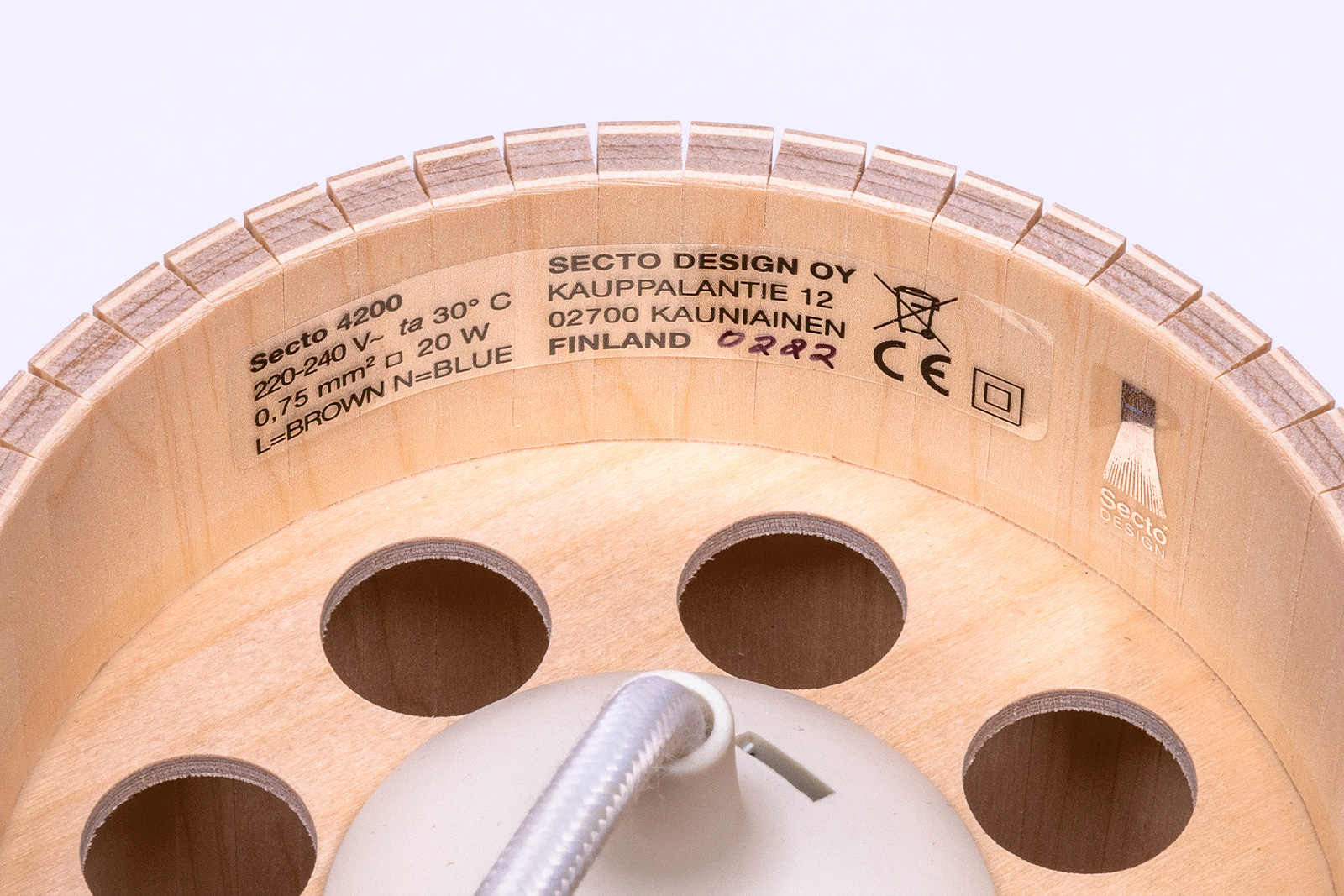
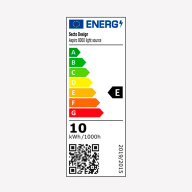
Certification labels confirm that original Secto Design lamps meet international electrical safety standards and allow their identification.
The legal risks of counterfeit products
The manufacturing, marketing and sale of counterfeit products is illegal. In many jurisdictions, displaying copycat lighting in public or commercial spaces may constitute a legal infringement depending on the jurisdiction.
Design piracy is not a minor issue. In many cases, it is linked to organised criminal networks operating internationally. For architects, interior designers, retailers and project specifiers, sourcing counterfeit lighting carries both reputational and legal risks. Due diligence includes verifying product authenticity and ensuring compliance with intellectual property laws. Responsible specification protects both the project and the professional.
Misleading images and product quality
Many sellers of counterfeit lighting use photographs taken from official brand websites or marketing materials. In doing so, they appropriate creative work produced by professional photographers — work that should be properly licensed and compensated. In some cases, the images shown online do not depict the actual copied product being sold. The delivered lamp may therefore differ significantly from what was advertised. Differences in material quality, structural integrity, proportions and finishing details are common.
Authentic manufacturers invest in product development, quality control and professional representation. Counterfeit sellers often invest only in imitation. If the marketing material itself is unauthorised, the reliability of the product should be carefully questioned.
Responsible manufacturing and traceability
Authentic design also means responsible production. Original manufacturers employ skilled adult professionals who are properly trained and work in appropriate, well-maintained facilities. Production environments are designed with safety in mind, supported by suitable machinery and carefully planned protective equipment that ensures both efficiency and worker wellbeing. Wages are paid in accordance with collective labour agreements and local regulations.
At Secto Design, every lamp can be traced back to the individual assembler through internal marking systems. This level of traceability reflects accountability and pride in workmanship — something counterfeit producers cannot offer. Responsible manufacturing may not be visible at first glance, but it is embedded in every authentic product.

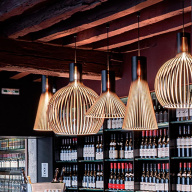
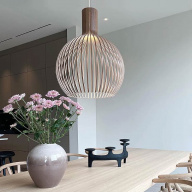
The structure of the Octo pendant lamp shapes the light: the dense upper section conceals the light source, while the lower birch slats let a soft glow diffuse between them.
How to recognise an original Secto Design lamp
Every authentic Secto Design lamp carries an official hologram label. This label is a clear and reliable indicator of originality. In addition, each lamp includes a certification label.
Purchasing through authorised retailers and representatives further ensures authenticity. If there is any uncertainty regarding a product’s origin, customers and professionals are encouraged to contact Secto Design directly. Verification protects both the buyer and the project.
Why choosing original design matters
Choosing original lighting is not merely a stylistic decision. It supports:
Electrical safety and regulatory compliance
Protection of intellectual property rights
Ethical and transparent business practices
Long-term product quality and durability
For architects and interior designers, specifying authentic products protects project integrity. For retailers, it safeguards professional credibility. For customers, it ensures safety, compliance and peace of mind.
Authentic design is built on expertise, investment and accountability — foundations that imitation can never replicate.